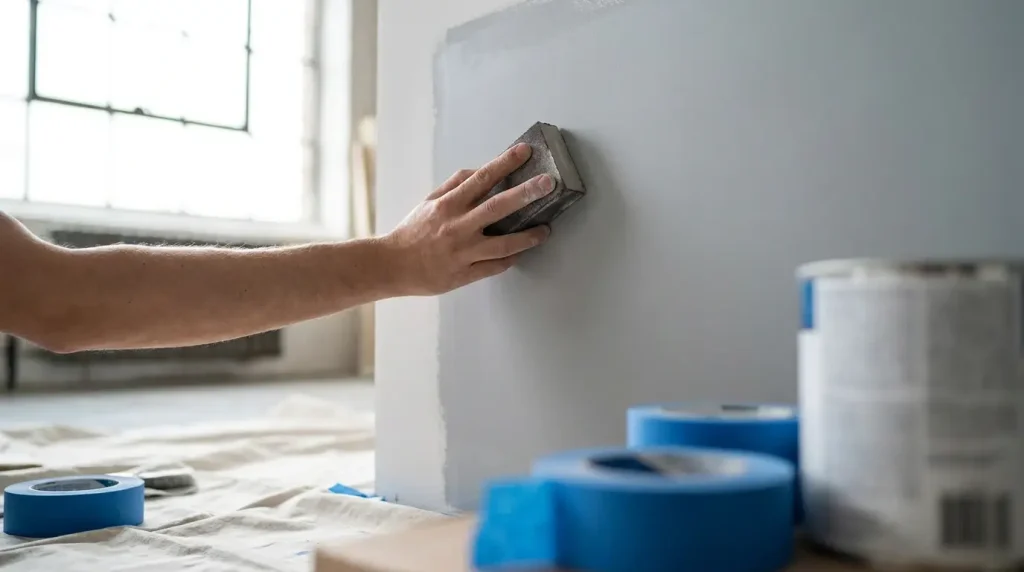
Most paint failures on the coast have little to do with the paint itself. Salt air, humidity and coastal winds punish poor preparation, so peeling and bubbling often appear within two years. For homeowners in Mornington, getting the preparation right is what separates a finish that lasts a decade from one that needs redoing.
The short answer: a perfect paint job is roughly 80% preparation. Clean every surface, repair all damage, sand to a key, spot-prime bare areas, then mask carefully before opening a tin. Skip any of these steps and even premium paint will fail early.
Cleaning and Repairing Surfaces
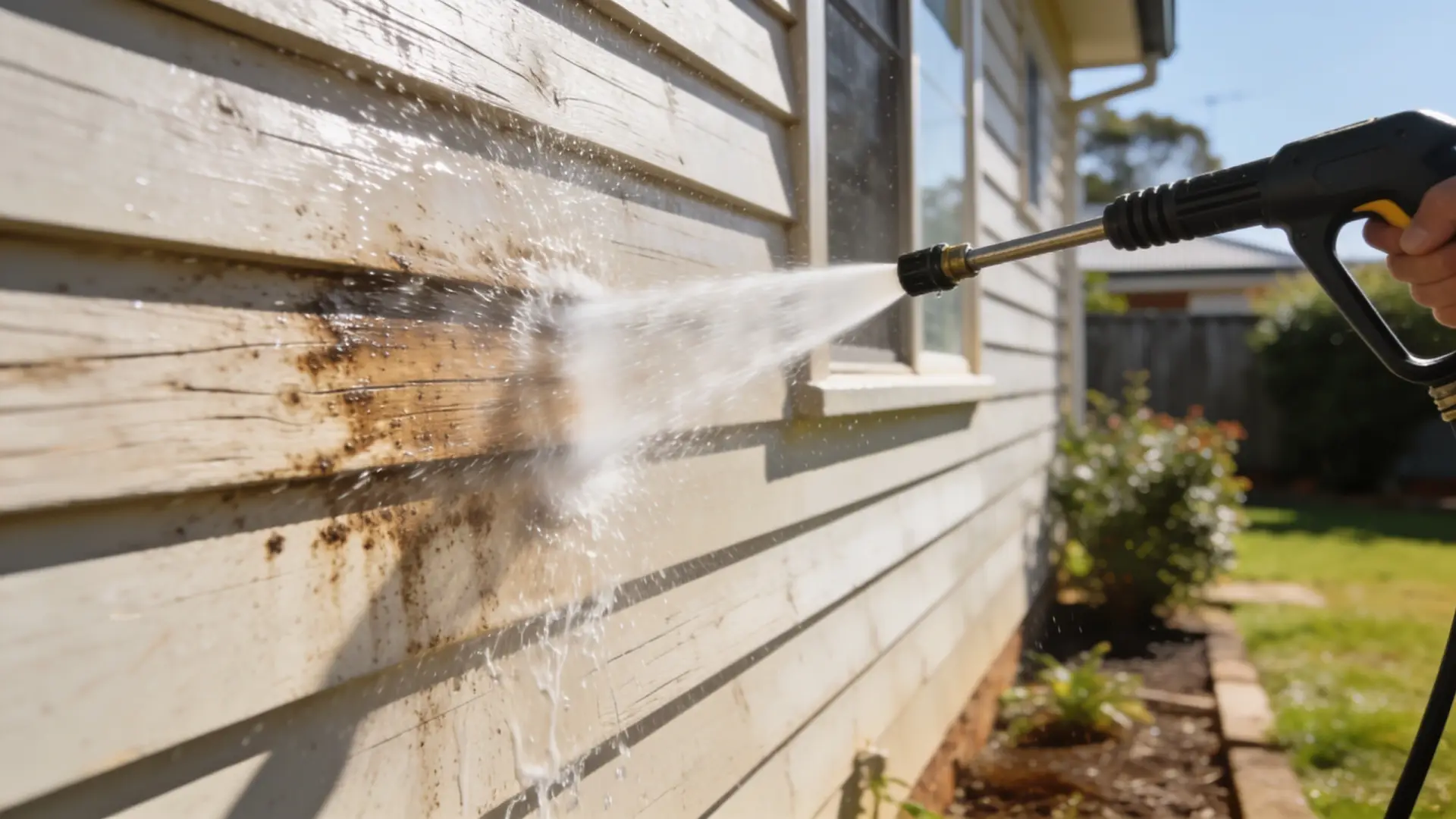
Start with a thorough clean. Dirt, grease and salt residue stop paint from bonding, and this is especially true near the bay. Exterior walls need a pressure wash, while interior walls respond well to sugar soap and a damp cloth.
Moreover, mould must be treated, not painted over. A common mistake is covering mildew with fresh paint, which simply returns within months. Apply a mould-killing solution, let it work, then rinse and allow the surface to dry completely.
Repairing Damage Before You Paint
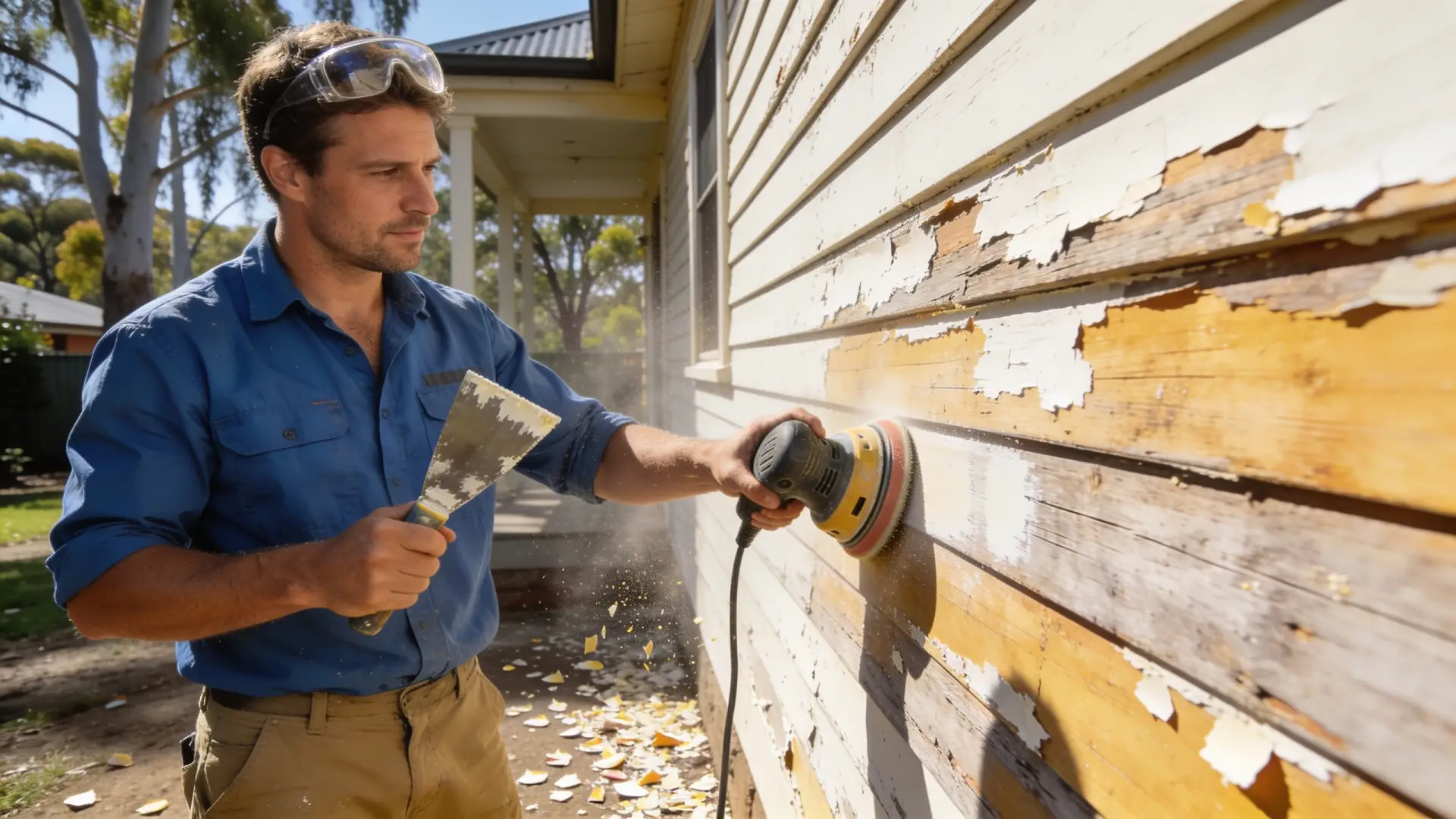
Next, inspect every surface for defects. Fill cracks and holes, replace rotted timber and re-seal gaps around windows and trims. Our guide to exterior painting prep covers these repairs in more detail.
- Scrape away all loose or flaking paint.
- Fill holes with a flexible exterior filler or interior spackle.
- Replace soft or rotted timber rather than patching it.
- Re-caulk joints so moisture cannot get behind the paint.
Sanding, Priming and Masking
Sanding creates a “key” that helps new paint grip. Glossy surfaces need a light scuff, while filled areas should be sanded flush. Wipe away all dust afterwards, because leftover residue causes a gritty finish.
Primer is the next essential step. Use a stain-blocking primer over water marks and bare timber, and a sealer-binder over chalky old paint. According to the Dulux Australia product range, different primers suit different substrates, so match the product to the surface.
Masking for Clean Lines
Finally, mask skirting boards, window frames and fixtures with quality painter’s tape. Remove the tape while the final coat is slightly tacky to avoid peeling edges. Furthermore, cover floors with drop sheets and not thin plastic, which can be slippery.
Quick-Reference Preparation Table
Use this table as a checklist before you begin.
| Stage | Task | Why It Matters |
|---|---|---|
| Clean | Wash and treat mould | Ensures adhesion |
| Repair | Fill, scrape and caulk | Blocks moisture and gives a smooth finish |
| Sand | Scuff and remove dust | Creates a key for paint |
| Prime and mask | Prime bare areas, tape edges | Improves coverage and sharp lines |
When to Call a Professional
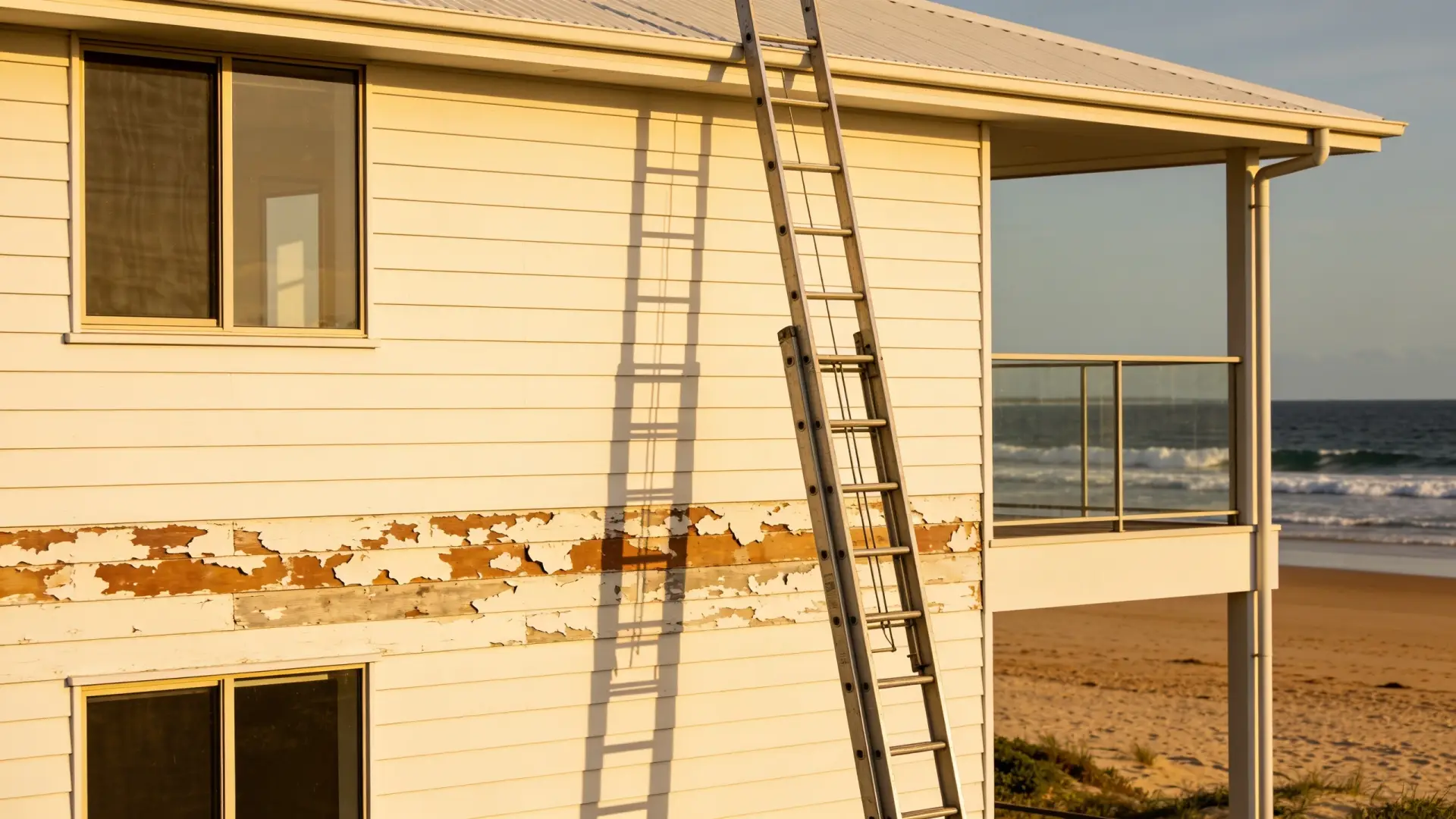
Preparation is time-consuming, and in practice it is where DIY projects most often stall. Experienced Mornington Peninsula painters bring the right tools, know how local conditions affect curing and spot problems early. For help choosing, read how to choose a painter on the Mornington Peninsula.
Additionally, good preparation protects your investment, whether you are refreshing a home or planning a sale. See how a paint job adds value to your property, then browse our painting services.
Your next step is simple: walk your property, note every crack, stain and flaking patch, and then contact our team for a preparation-first quote.